Facing Facebook

Facebook is like being invited to a “come as you are party”. It starts with an invitation to join and after that anything goes. It is astounding how rapidly it has grown from a young person’s social network to a complex and multi-purpose “social” networking site.

Writing on the public wall redefines the term Graffiti. You choose your level of vulnerability when writing on the wall; will you be open and frank, highly vulnerable or low key? It seems that anything goes. Language isn’t important, grammar has become insignificant. Social networking is already cliché and banal and has many outlets including various other social outlets, blogging,
texting, twittering and whatever else is being “invented” at this moment.
Personal profiles, photos, videos and décor for your Facebook page are standard and setting standards.

What I am writing here is certainly not news or even enlightening unless you are truly a Facebook novice. I favor and welcome progress and development in communication and high technology. It is just astonishing that there are no rules to protect our use of language; grammar and spelling.

Web texting has become the new wave of writing, the new prose and poetry. Many a teacher has complained about the decline in student writing in essays and homework, the decline in creative writing skill. Perhaps work in this style will become the future classics in the manner of highly regarded writers such as e. e. Cummings and John Steinbeck and all the other pioneers who brought change in literature and communication in the last century.

Facebook is huge with so many layers and complexities. It goes well beyond a simple way to check up on friends. By clicking into specialty sites, you can sign on to foster the release imprisoned Chinese journalists, offer sympathy to celebrity families suffering loss, donate in aid of disaster victims, help elect a president. You can hunt for a job, find classifieds, join causes or send virtual gifts to anyone you choose. Messages can be to one individual, group, to friends or to complete stranger.

Once invited to “come as you are” you are free to fit in as you “see fit.” How many hours will you rack up facing Facebook while it faces you right back. At the age of 16, I was invited to a “come as you are” party. I was caught dressed up returning home from a date. Nowadays, I prefer my jeans and T-top, I get “caught up” spending too much time on my Facebook Page. Through Facebook and like going on a date, the quest for “getting to know” you never ends.

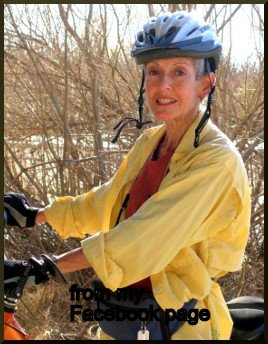
Some images from my Facebook page;

Excuse Me If I Shiver

Excuse me if I s-s-s-stutter a bit. My teeth are chattering and it is hard to control my speech. I’ve just returned from a full day of errands. This is satisfying in itself, getting through the to do list, but first, I had a doctor’s appointment. I felt a bit light headed and hungry from fasting all night before a clinical test.

They finally called my name and ushered me into the examination room after sitting almost 1/2 hour in the COLD waiting room,
The instruction was to undress and wait lying prone on the table wrapped in a thin paper robe, desperate to keep warm,

The medical test was administered and then, still wearing the paper excuse for a robe, I had to carry my belongings into another examination room to see the doc. She appeared after another eternal wait, prone in the COLD room. The next step was to dress and venture back into the waiting area only to stand in line at the cashier while the two people in line ahead of me had to solve insurance problems—teeth still chattering, I was still shivering in the COLD dry air conditioning.

As I approached the exit, an LED readout on the thermostat by the door glared at me—“AC 62F. “

The next stop was the blood-drawing clinic, doctor’s order in hand. I sat in the COLD waiting room one more time and then was called into the blood-drawing room. The technician took the blood, and thankfully, I could stay dressed this time. I felt as if my blood sample was below 70F and I was beginning to turn blue. Back into line I went to check out of the clinic, hugging my sweater around me . I headed for the exit to find my car.

Ah, what heaven it was to step into the fresh, hot, withering air, 90F at 9:30 AM and bright sunshine. I wanted to stay there for an hour to defrost, but I was free and determined to do my errands. I had to pick up my photographs from the framer. As I opened their door, I could feel the frigid air spill out of the doorway. I had to drop off a form at the library. Not knowing where to go, I was directed on a wild goose chase in the chilly air-conditioned building until someone rescued me and headed me to the correct office. Then back into the sun for a brief and delightful respite. I climbed back into my car, windows open, air conditioning off and drove to the next stop.

This destination, a big box to pick up books for my grandsons and then onto another big box for supplies for our up and coming RV trip. Next stop, to the grocery/pharmacy to drop off my doctor’s prescription, grocery shop and then pick up the meds. Grocery stores in my opinion win hands down as the coldest of COLD places; no question about it. It felt like a dry 55 degrees F.

Yes, I understand that the majority of you are complaining loudly about the heat wave. You are hot; you are sweating, maybe loosing your temper, feeling dehydrated. You crave those blasting gusts of wind from air conditioning vents experienced in most facilities, offices and stores. I appeal to office managers and building maintenance staff, not all of us are made to tolerate such temperatures. It feels like abuse. I can understand and would welcome cool along with everyone else, but frigid, intolerable blowing air? There is something wrong here.

I am not alone. I have heard many office workers and retail clerks complain that it is much too COLD. Yet, they stay on the job and never request or give up asking for a little movement of the thermostat knob to raise the temperature to a livable level. So many people I know speak with a hoarse voice or rasping whisper, sneezing and coughing and complaining of a summer cold, of skin that is freezing to the touch, fingers and toes that feel numb as if just off the ski slopes or suffering the icy blasts of a winter storm.

Have you read the latest report that the more upscale the store, the colder the temperature in the store? Please explain that theory to me someone. Please tell me why we are so addicted in this country to blasts of cold air, when moderate air would be comfortable and so much healthier?

I wish to start a grass-roots effort fighting AC Extreme. If not for your own comfort, then for the environment. Millions of dollars would be saved, millions of watts of energy, vast amounts of hydro power, fuel, and more would be saved or spared by regulating our air conditioning. Let’s warm it up a little bit, stop shivering and enjoy summer. Fall will be here in the shake of a political curb sign.

Whenever I encounter a sister-sufferer in the dairy aisle of a supermarket, Hallmark lane in a pharmacy or in some office somewhere standing stiffly, hugging herself and rubbing her chilled arms, I just want to give her a hug, and shout out loud in grand chorus; I have company, I am not alone in this quest. I have found male sufferers as well. Have mercy on us shivering souls and give the thermostat button a tweak upward past freezing. Save medical bills, save the environment and diminish the amount of used Kleenex tissue thrown into the land fill. Thanks for listening, I have stopped shivering for the moment.

Donald Judd, Minimalist Artist Eternalized

Marfa, Texas, located west of Austin and north of Big Bend National Park, is a town with secrets. We have passed through Marfa twice before without discovering the art scene that is reputed to exist or see the “mystery” lights that put Marfa on the map. A large observation center has been built 8 miles east of town to view these lights. Some people have called this a hoax. So be it.

Determined to solve these mysteries for ourselves, we camped in nearby Alpine and drove into Marfa to discover its secrets for ourselves. This proved difficult. There are no visitor center signs, no information centers, nothing points to the jewels we finally uncovered even though we could see several galleries and workshops in old and rustic buildings in town.

Quizzing the proprietor of El Paisano Hotel, the librarian, restaurant staff, and the chance meeting of the Conservator of the Judd Foundation, the veil finally fell off and we spent hours on guided tours and on our own exploring the Minimalist world of Donald Judd, Daniel Flavin and John Chamberlain.

Books are needed to do justice to the collections and permanent exhibitions in Marfa and their place in art history. These books and publications exist as well as web sites (see below) that will give you a glimmer of what we saw and learned. Donald Judd arrived in Marfa in 1973 and his story and work is maintained in two foundations, the Judd Foundation and the Chinati Foundation. I have signed a release and cannot share any images I made of the artwork in a public forum. It is worth an electronic journey in the least to these web sites and if you can, a trip to Marfa, Texas.
www.juddfoundation.org
www.chinati.org

Oh yes, the mystery lights are still under a veil for us. If you do visit and see the mystery lights, please, let me know.
Photos of Marfa Town Hall and Chinati foundation welcome sign
entertext
entertext

Ann Carol Goldberg

The Fire On The Mountain

The fire on the mountain rose in two pillars of white smoke. Our family had gathered for a winter reunion. There we stood on the dry grass in my son and daughter-in-law’s Virginia farmyard watching the smoke. The persistent drought was on all of our minds; is there a chance that the wildfire could blow our way? How did the fire start and how far away is the fire?

A truck roared up the driveway. It was marked Covesville Fire Department and driven by the fire chief. He requested permission to open the gate adjacent to Dan’s farm and drive up the road toward the fire area. The men in our group joined the chief to lend a hand. A dozen volunteers appeared in their pickups with their blue lights flashing. The driveway was jammed with their vehicles and anxious men standing and staring at the fire deciding what to do next.
entertext

All of us were wary. Could the fire be a threat to the farm? Would we have to evacuate? My son and daughter in law kept cool heads and discussed the possibility with the fire fighters. We had plenty of food and water to take and we could stay in town if necessary. The firefighters assured us that we were not in imminent danger.

My wonderful daughters in law, Malena and Miriam and I needed to grocery shop for there were five young appetites to fill. An opening was granted so we could drive down the farm road to the highway into Charlottesville to stock up. Until now, the road had been plugged with firefighters vehicles wending their way up to Hungry Town Hollow. We could see the smoke from Highway 29. There seemed to be two sizeable hillocks between the fire and the farm.

The location of the fire was remote and difficult to reach. Several the firefighters planned to hike to the fire to keep watch for the rest of the day and through out the frigid night. We did not envy them and did offer hot drinks and food. They were well stocked and prepared for this vigil. The cause of the fire was never relayed to us. One of our neighbors thought he had heard a loud noise and saw people walking on the ridge just before the smoke appeared. But this was most likely unrelated and coincidental, being the last day of deer hunting season.

We returned from town two hours later. The pillars of smoke had not grown in size and seemed to be contained. The trucks were gone; having dispensed the hardy firewatchers to their place for the mountain watch.

Life on the mountain farm is adventuresome. In a period of two days, we experienced the wild fire, fallen trees blocking the single road and icy driving conditions with a neighbor’s car going over the edge, incredibly with no injury or damage to the car. I am awaiting my first sighting of fox, bear or mountain lion; I will have to be very patient.

Ann Carol Goldberg

What a sight we must have been

What a sight we must have been, driving our motor home, climbing the narrow park road in Colorado Monument National Park. How incredulous was our response to the exquisite scenery deep in the canyons. Could there be still more unique and spectacular vistas than those we had already seen in places such as Zion, Bryce and Arches National Parks? As we ascended the mountain, we did have a niggling problem. Could we indeed negotiate the mountain tunnel that we knew lay ahead of us?

Two reliable sources, our host and the staff person at the Colorado visitor’s center had assured the accessibility to the tunnel. Our nerves were still tingling with doubt as we realized how narrow the road was and as we sighted the sign just in front of the tunnel; 10’ 6” clearance. I was at the wheel and had pulled as far to the right as I dared in case another vehicle entered the tunnel facing us. The traffic had been almost non-existent to say the least.

Should we indeed drive through the tunnel? After all, we had the assurances of experts and in “eyeballing” the tunnel; it did look higher than the prospect offered by the clearance sign. The story offered was that after an incident with a traveler “scraping” the side of his vehicle and suing the park authorities, the sign was changed to represent lower clearances than the actual height.

The weather was crispy, clear and sunny, We were about 7200’ above sea level. Turning around on this high ridge would be possible but tricky after unhitching the tow and pulling a tight K-turn with the motor home. We love adventure and challenge and the tunnel appeared “friendly.” We chose to charge onward.

Paul donned his barn coat and cap and exited the rig with the intent of leading me through, assuring that we would not scrape the air conditioners or air vents on the tunnel walls and stopping any on-coming traffic. We could see all the way through the tunnel, a big plus indeed. I centered myself on the entrance and he gave me the thumbs up. As I started to drive into the darkened mouth, a white van entered from the opposite direction and stopped about 20 feet from the rig, unable to get past me.

Paul tried to speak to the young woman driver, but as he said, “she ignored me or did not even notice me.” She just stared ahead, perhaps frozen or unsure of what to do. If she had just pulled a bit to her right, I could have adjusted my position to let her pass. I proceeded to move slowly to the right watching Paul’s hand direction like a hawk. The white van finally drove on. He urged me ahead, later declaring concern that he could not watch his back for oncoming traffic and lead me through as well. I returned to the middle of the road and continued to move ahead at about 2 miles an hour. It was dark and a bit difficult to see. Adding the headlights helped.

By now I was fairly confident that there was plenty of headroom but continued to move at a snail’s pace. Not a scrape, scratch or grinding noise. No more traffic faced us, and after an eternity we were through the tunnel. By this time, a red car caught up to our rear. Paul climbed aboard and we continued up the mountain as he sat down and belted in. I am sure our cheers of delight and relief could be heard for miles around. Perhaps we should have been more trusting of the words of our “advisors,” but fear of damaging our house on wheels was also strong.

This trip, we have finally reached the famous, natural sites of Nevada, Utah and now Colorado and it has made us so happy. Our destination in driving through the tunnel was Glade Park, CO just above the Colorado National Monument, to visit a delightful couple, my daughter in law’s sister and brother in law. They had invited us to park our behemoth RV on their property, alongside their exquisite new home. How excited we are to get to know them and to really be in Colorado for our first time. We are almost fully fueled with gas and propane. The temperatures are forecast for lows in the mid 20’s and highs in the mid 40’s.
bryce

In our minds, we are truly “failures” as snowbirds. The idea, as we understand it, is to leave the northeast in the winter to seek and find warm, even hot weather and to stay put for a while in these locations. We have had a few stretches of warm in Florida, Texas, Arizona, California and Nevada, but our woolly hats and gloves have also been at the ready. The decision this year has been a thrill; to experience the heritage and witness the beauty and splendor of the national and state parks in the southwest, high in the mountains, chancing cold temperatures and ice and snow.

Zion
arches
This has allowed us to have hiked, rock-hopped via Jeep, climbed high ridges, trekked through “hidden canyons,” been soaked by secret waterfalls, assaulted by sand storms in a deep canyon, met wonderful people and experienced some of our dreams of a lifetime.
Moab
Perhaps it is in our blood, in our genes, in our psyches to gravitate toward cold. Perhaps, we can’t help ourselves. Perhaps we are a bit crazed, but we seek adventure, beauty and the chance to enlarge our horizons. We have not really suffered one bit, more than some dry and cracked skin and runny noses. Our cheeks are brilliantly colored from wind, and sun, we are robust and feel so lucky to take the roads less traveled.
Just South of the strip

Greetings from Boulder City, NV which turns out to be a desirable place to stay while Paul flies home to Rochester for a few days. Las Vegas looms large just to the North. I thought its proximity would spoil everything within 100 miles of the Gambling strip. I was proven wrong.

Boulder City has much to offer: from the historic downtown and the Boulder Dam Hotel, to Lake Mead, (still popular even though the water level is almost at a record low—drought and heavy demand) and an abundance of great choices for extensive hiking, biking and kayaking. Oh yes, and there are casinos, golf, dining and spas in town. Let’s not forget the delightful weather (at least in early spring before the 100F+ degrees begin. Besides all of these reasons, the folks here are super-friendly and anxious to tell a strange about their chosen place to live—most folks seem to be imports. Here are photos of a popular watering hole and a quilting shop called Tumbleweed that would be a Mecca for my quilting friends.
nosun
Tumbleweed
To fill my time while Paul was traveling, I chose to hike the railroad tunnel trail alongside Lake Mead. The railroad tunnels are a remnant of the dam construction in the 1930’s now sans the tracks. The sky was deep blue and the temperature 78F. My arrival time driving to the trailhead was delayed by the traffic jam waiting to cross the dam. I finally arrived via the start of a left turning lane leading into the park. I drove past at least 4-dozen cars waiting in line at the sign reading “Hoover dam—8 miles.”
thedam
towers
Now on the trail, I thoroughly enjoyed the 4 1/2-mile hike to the dam. I am certain I reached the dam, walked part-way across and back and hiked the 4 1/2 miles to return to my car before these folks in their vehicles could park and visit the dam themselves. I am back on the rig, resting my tired legs and happy to have seen the Hoover Dam up close and personal.

From the Strawberry Garden; June, 1946.

“Key management;” this becomes important in our modern lives as we acquire multiple house, many vehicles and businesses. Security is an issue like never before. We have keys of all shapes and sizes, remote electronic keys and keypunch pads. For me, it brings up a memory of simpler times.

The house I grew up in was Circa 1930’s. A front porch spanned the front of the house with 5 steps providing access to the space that fed the over-active imaginations of pre-schoolers shared by my friends and myself. The porch held a round metal table, classic metal rocking chairs that actually bounced, and a classic cushioned glider complete with a loud squeak when moved. A thick, sweet-smelling honeysuckle vine hugged the glider, bringing the promise of spring.
blossom

The floors inside were dotted with heating ducts covered with lacey metal covers, a parlor with an upright piano, a stair case complete with “sliding” banister and a musty smelling, walled-in back-staircase and the back door also sported a small porch with its 5 steps. Heavy skeleton keys opened the doors and the water heater groaned into action at the push of a black button.

My dad had converted the large octopus coal-style furnace to gas sometime in the mid 1940’s. Therefore, the former “coal room” was transformed into my playroom; to enjoy my dollhouse, a miniature china tea set, my older brother’s old trucks or ride my tricycle around the large furnace and have plenty of smooth floor to roller skate in the winter.

My mother reigned over the gardens, one forming long and narrow strip between our driveway and the Little family’s driveway. She prized her peonies, strawberry plants and rhododendrons growing in that space. I remember “helping” plant, water and weed.

Of course, the pinnacle event came when the strawberries were ready to pick. They glistened red with dew, almost reaching out to your hand to help you guide their way into your cereal bowl. I was only 4, but I remember the joy of running out the back door, clad in PJ’s, sporting bare feet and stumbling over the stones in the driveway, enduring whatever pain was inflicted by the gravel to reach the dew-covered strawberries. That chubby little girl is me, a bit younger than 4.
ACG
Is it possible that the strawberries of memory were sweeter tasting than today’s berries or is it sweeter in memory? Unequivocally, the berries were well tuned with the vintage 1946 corn flakes. I wonder if corn flakes have changed at all in the 60 or so years—perhaps they are the same or now more fully whole grain, full of supplements and nutritionally geared to keep up with the times. (To see a of the history of corn flakes, go to; http://www.ideafinder.com/history/inventions/kelloggcf.htm)

One misty, cool morning looms in my memory. My dad must have been away on tour with the RPO. Mom was in her housecoat. I was pajama clad as above and bare foot. We scooted outside to pick berries. The back door slammed shut, locked and stood solidly closed. I remember innumerable occurrences of being locked out, but later in the day, fully clad and less “desperate.”

To get back in, we always had recourse; two neighbors with skeleton keys that matched our door. We ran next door to the Little’s, fearing awakening them. Then we remembered their two-week trip to the Mountains. Perhaps that meant the Adirondacks or the Catskills.

The Shubener’s, also owned the “right key” but lived 3 doors away. I am sure my mother was highly embarrassed that anyone see her in her housecoat, but I am sure we both traipsed to their door—no answer, no one home. It felt like hours to me, but our problem became smaler when a neighbor in the apartment house across the street saw us looking forlorn. Perhaps we were sitting on the front steps, chins in hands. He returned to his apartment and emerged again holding a huge “jailer” ring of skeleton keys. Success, one of the keys worked and opened our door.
skeleton

I don’t have the memory, but I am sure my mother showered our neighbor/savior with dew-clad strawberries and excessive thanks. We now added another source in impending peril, a large ring of heavy, gray metal skeleton keys. It just takes patience to find the right one to open our door.

Road, Railroad, Rollin’ Tumbleweed

Everything in life seems to fit into some category or other. Traveling down the road as we do in our motorhome, we observe regional characteristics that we fit into categories of our own designation.

The scenery varies from rolling hills of central New York to the flat plains of the southwest, the huge farms of the food belt, the loblolly pine forests so common in the south, abundant wetlands and lake regions and ocean beaches.
loblollypine
fanclouds
For years we have referred to the three R’s of the roads we traveled as incessant miles of “Road-RR-River.” For miles we would seemingly match pace with trains on the track and boats on the river, running parallel to our road.

Now that we have traveled more extensively in the south, the 3 R’s have taken on a new character; “Road, Railroad & Rollin’ Tumbleweed.” Roads and railroads still remain but the Rivers give way to acre upon acre of arid land, huge open-range ranches, mile after mile of flat dust-blown plains, sometimes made up of plain empty sand or covered with desert brush. Long miles are lined with fences extending into eternity and frequented with plenty of rolling tumbleweed picking up dust and debris as it tumbles in the wind.

Rollin’ tumbleweed? That our path as well, rollin’ down the road. We add and subtract to ourselves, acquiring some dust, dirt and sand but mostly experience, new acquaintances and a collection of endless adventures. Soon, we settle down and stop rollin’ for a while as if the wind stopped pushing and we make ourselves stay put for a night or a week or two. We just have to control our restlessness, settle in and stay out of the wind to stop rolling.

In a rest stop on the way to the BLM (Bureau of Land Management) sites near the Yuma Proving Grounds on the Arizona/California State line, Paul was entranced by a bit of tumbleweed on the move. “It actually makes noise as it rolls.” Not loud, not harsh, not calling for attention as such, just a subtle “swish swish” of a noise, going the way of the wind and whim—just like us. But we have a purpose and learn from what we gather.

Long freight trains graced with double-stacked shipping cars don’t escape our attention. The goods that form our nation are on those trains. Goods meant to fill the big boxes duplicated over and over in every city in our country; goods for building, goods for consumption and supply. It is mind boggling to think of the items that pass by us every day. The push to buy locally, to decrease reliance on importing and trucking goods and the competition by small farmers and manufacturers to ‘beat down the reins” of the large farms and corporations wanting to smother them needs our attention and proper legislation.
train
containers
It’s time to hook up and get back on the road. What will we acquire today? Hopefully, it will be more wisdom and insight beyond just plain picking up dust and dirt in keeping up with the rollin’ tumbleweed. Perhaps we will see a country moving forward to improved conservation, global relations and better times for all.

Desert snowballs

3/17/08 One reason Paul and I have become RV vagabonds is to escape the cold effects of the winter months. We seek sun, warm temperatures, adventure and the pleasure of meeting a wide variety of people on the road. The winter of 2008 has met all of these expectations.

We departed Los Angeles a few days ago after a glorious visit with our son Yechiel, our daughter in law, Miriam and our adorable grandsons, Azriel and Tal. For once, the weather in LA was warm, sunny and welcoming. Our motor home faced the Pacific Ocean and the beach just a few feet away from our windshield.

After our 12-day visit we departed LA, the busy freeways, the crowds of people all wishing to occupy the same space at the same time and headed northeast for the Mojave Desert Reserve. We have become fans of the deserts of California, the Imperial Valley, Death Valley, Joshua Tree, the Anzo Berrego and more. It was time to try a new location. We found the rustic campsite and set up to camp for several days. What better name could there be for the campground in the Mojave, but “Hole in the Wall”, (from the lore of Butch Cassidy the Sundance Kid and the Hole in the Wall Gang)? Our altitude was at 4000’ above sea level. Arrival time was late on a Thursday afternoon, with brilliant blue sky and the sun playing in the rough peaks and mesas near our campsite. The temperature was in the mid 70’s. We met our neighbors and enjoyed cocktails and conversation together to share our RV experiences.

Having listened to NOAA – the monotone but informative voice of the national weather channel, we knew to expect high winds and cooler temperatures. And that is exactly what we got. Our rig was buffeted and shaken with winds probably up to 45-50 MPH. Being old hands at weather of all kinds, we brought in our slides and battened down all “hatches.” With no hook ups at this campground, we were dry camping and loving it.

The wind whipped at us during the 4 days we were there. We had plenty of company including tenters. But, we remember our days of tenting and thinking this was heaven. (in case you think we are completely out of our minds, there were times when we would keep the tent in back of the station wagon and seek the nearest and greatest B & B for our comfort and staying warm and dry.) These folks did not have that choice; our location was very remote indeed.
sunshine
Our minds were made up not to miss a trick or attraction in the Mojave now that we were embraced by its beauty and smack in the middle of the Reserve. Our days included visiting an historic town called Kelso with a rich history in the development of railroading, a dip down into the Mitchell Caverns to see the wonders of stalagmites, stalactites and a new formation to us called shields. (that look like flat, cylindrical plates pressed against the cave wall or ceiling). We did an unsuccessful hunt for baby desert tortoises (a bit too early in the season), hiked into and climbed a canyon wall for a spectacular view. We also climbed down into volcanic lava tubes and saw vast Cinder Cones left after earthquakes as recent as 10,000 years ago.
interiortube
There are still some hikes to be enjoyed on our next visit, the Mojave Joshua tree forest, the “burn over” of a few years ago to photograph and the Kelso Dunes to climb. Our departure date was uncertain and would be determined by the prospect of diminishing the high and eventually annoying winds.

Sunday morning arrived with no diminishing of the winds and a new surprise: SNOW. The snow had been forecast for above 5200’. So it was indeed, a surprise.
snowballs
We decided to depart the Mojave to seek relief from the constant blowing and the cold. My skin is so dry from the cold and my arthritis is saying “hello.” The campground is almost empty leaving only 2 rigs plus that of the campground hosts and the single tenter remaining. Warmer weather is due to arrive in a few days. The spring wildflowers will continue to grow, the kangaroo rats will chew on campers belongings left unattended and the baby tortoises will hatch without our notice this year. We have much to look forward to on our next visit to the Mojave Desert, a place well-noted in history through folk lore, fiction and works of art.

seafan landscape, rustic and fragile

Upon viewing a map of Louisiana, the land forming the vast delta below New Orleans flows away from that city to the west and south simulating a lacey, sea fan pattern into the Gulf of Mexico. The forces of erosion, time and the evolutionary process are fully evident. It isn’t news to report that since Katrina, the emphasis of reconstruction or the lack thereof focuses on New Orleans. After two years of return travel through that region, we have observed first hand the vast swath of the storm and the pain that it has inflicted near and far from New Orleans. This year, our path took us through New Orleans for a quick assessment of current conditions then we continued south from New Orleans, following route 1 from Riceland to Grand Isle in order to learn a little about life in that area.

Driving west into New Orleans on Route I-10 we gasped at the still vast neighborhoods in the same state of disrepair as we found them the January after Katrina, flattened concrete slabs that once held strip malls, service stations, banks and restaurants and apartment buildings and homes reminiscent of a war zone; skeletons of former buildings, debris still strewn around or sometimes piled into great pyres of destroyed lives. The color blue in the form of great plastic sheets covers damaged roofs providing some color in the otherwise bleak landscape but proving there is no relief in re-building these neighborhoods. The lasting state of disrepair is hotly blamed on governmental graft and corruption—what else is new in this world? Yes, acres of stored Formaldehyde-laden FEMA trailers are in full view.

We left behind the evidence of lives held in suspension; happy to leave the heavy traffic on route I-10 to discover what life is like on the fringes of the delta land toward Grand Isle. As expected, we were as students on a journey. The drive is long and slow, winding through many towns and villages along the intercoastal waterway. The scenery; rustic, rough, random and chaotic. These folks are not interested in aesthetic beauty or organization and order. They are interested in eking out a living in the two large industries of the area, oil and fishing (shrimping). They are serious and hard working as evidenced by our several return trips north in our tow car to observe more closely the way of life. Actually we saw few people, they were in school, at work and not out and about. The largest groups of people we could see were in the shipyards working on repairs—standing precariously on non-OSHA sanctioned scaffolding (see photo).
OSHA
The support businesses specialize to serve the needs of this community. Billboards advertised helicopter leasing, off-shore catering, offshore delivery services, headache and other pain relief, addiction counseling and chiropractic services, work-injury aid, fishing net repair, long-term parking for off shore workers, as well as ‘ we are hiring” signs.

We had short encounters with people. They are very warm and welcoming focused on their own worlds. Paul’s desire to buy fresh shrimp became an adventure in driving, navigating and patience. It is off-season, but fresh shrimp could be purchased. We tracked a couple of dead-end routes wishing for an amphibious vehicle to actually reach the tiny shack on the dock’s end that advertised being open and having stock to sell. After three or four false end-points, he did indeed fill his quest for shrimp and for stone crab claws and enjoyed them very much. (I won’t express my opinion, being a veggie). The photo shows the large scale the local fisherman used to weigh one pound of shrimp. I guess they are used to selling amounts much more vast than one pound—the cost–$3.75. The man himself was a crusty character, his speech difficult to understand but he reflected the aura of the region.
shrimpstore
shrimpboat

The port towns are marked with long, singular rows of shrimping boats lined up parallel to the road, colorful against the otherwise bleak landscape of houses and land. There were no boats out on the water. Driving through the towns was slow enough, but every third or forth street seemed to host a school with 20 mph limits. Education of the young is not forgotten in this area.

This area has suffered devastation from many storms, beyond Katrina, but residents understand their vulnerability in the eyes of Mother Nature. Most stay; generation after generation, knowing of course that life is not easy, continuing to work in the industries that employed their parents. Technology affects and changes their lives and jobs come and go. Tourists arrive and build vacation homes on stilts but there is no dimension of booming growth and change as we have seen in other water-front areas. The restaurants and bars are rustic and simple. Life goes on. In the words of one store clerk, “life passes by slowly and that’s how we want to keep it.”
paincenter